Japan Earthquakes Tsunami Warning
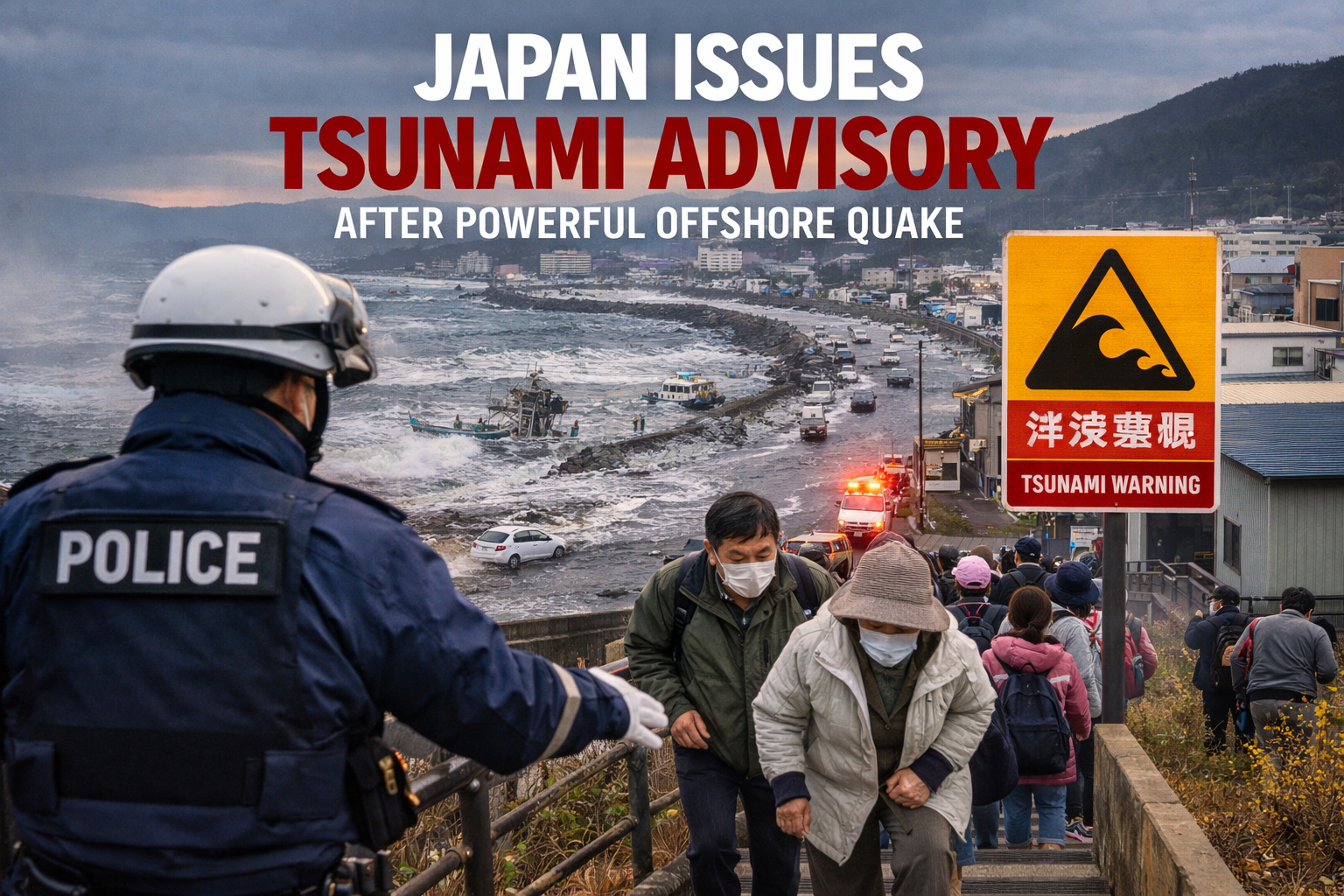
A powerful offshore earthquake struck northeastern Japan on Monday, prompting tsunami alerts, coastal evacuations and transport disruptions before officials later lifted the advisories. Japanese authorities said the quake hit off the Sanriku coast at about 4:53 p.m. local time at a depth of roughly 19 to 20 kilometers, with a preliminary magnitude of 7.7. By late Monday, officials said there were no immediate reports of major damage, though two people were reported injured after falls.
The tsunami alert was issued because an earthquake of that size in waters off Japan’s northeast coast can generate dangerous waves with little warning. Japan’s meteorological agency initially warned that waves as high as 3 meters could reach parts of the coast. Instead, the largest reported wave was about 80 centimeters at Kuji port in Iwate Prefecture, with a smaller wave recorded elsewhere in the region. After that, the alert was reduced to an advisory and later lifted altogether, while the Pacific Tsunami Warning Center said the tsunami threat had passed.
For residents in the affected coastal areas, the immediate message from authorities was simple: move away from the shore, head to higher ground and stay there until officials said it was safe. At one point, more than 180,000 people in five prefectures from Hokkaido to Fukushima were advised to take shelter. Towns including Otsuchi and Kamaishi issued evacuation orders, underscoring how seriously coastal communities continue to treat tsunami alerts.
Contextual links



For most readers outside the evacuation zones, the immediate tsunami danger has eased. The main practical effects now are likely to be localized transport and travel disruption, continued safety checks and the chance of official updates as authorities assess roads, rail service and coastal infrastructure. Bullet train service linking Tokyo with northern Japan was temporarily suspended, and some highways were closed after the quake. Japan’s nuclear regulator and regional utilities also said no abnormalities were detected at nuclear facilities in the affected area.

What matters now is not only the quake itself, but what can follow it. The Japanese government said Monday’s tremor slightly raised the short-term risk of a much stronger quake along the Japan and Chishima trenches over the next week, from a normal probability of about 0.1% to around 1%. Officials stressed that this is not a prediction, but a reason for people in vulnerable coastal communities to review evacuation routes, confirm shelters and check emergency supplies while continuing normal daily life.
The next phase of this story will likely center on aftershocks, any newly confirmed damage and whether transport or local services remain disrupted. For now, the official guidance is more reassuring than alarming: the tsunami threat has passed, but authorities are still urging caution and preparedness in a region where even moderate follow-on events can have serious consequences.